gptdevelopers.io
Hire GPT Developers
Table of Contents:
Blueprint: Integrating Claude, Gemini, and Grok into Enterprise Apps/


Patrich
Patrich is a senior software engineer with 15+ years of software engineering and systems engineering experience.
0 Min Read





Blueprint: Integrating Claude, Gemini, and Grok into Enterprise Apps
Enterprises don’t need more hype; they need a blueprint that ships. Below is a pragmatic path to embed large language models-Claude for careful reasoning, Gemini for multimodal context, and Grok for fast, conversational triage-into existing stacks without blowing up risk, spend, or timelines.
Reference architecture
Start with an API gateway fronting a stateless orchestration service. Requests flow through policy checks, a retrieval layer, then a model router that selects Claude, Gemini, or Grok based on task, latency SLO, and data sensitivity. Responses are normalized, redacted, cached, and logged to an observability pipeline.
Model selection that matches the job
- Claude: best default for safety-first summarization, policy drafting, and analytical planning; strong refusal behaviors reduce compliance workload.
- Gemini: excel at multimodal tasks-classify images in tickets, parse docs, or ground responses with tabular embeddings.
- Grok: great for high-throughput chat, incident swarming, and rapid Q&A where latency dominates.
Data strategy: retrieval, grounding, and context budgets
Adopt retrieval-augmented generation (RAG) with a strict context budget. Store embeddings per business object (contract, SKU, policy) and include time-scoped metadata. For sensitive fields, pass only hashed tokens and rehydrate post-inference. Maintain a golden evaluation set to catch regressions when updating embeddings or prompts.
API layer, caching, and Incremental Static Regeneration
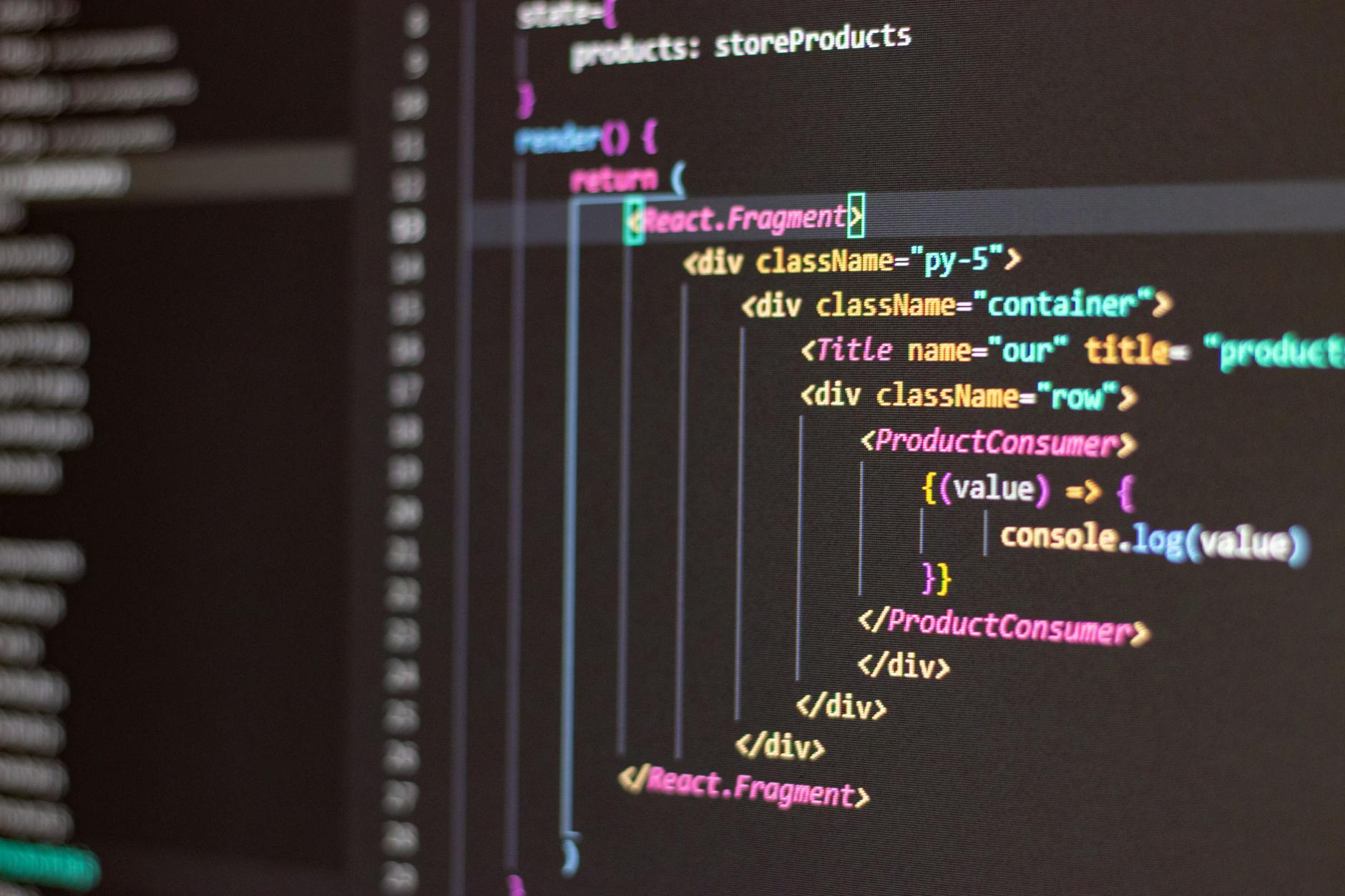
Not all answers need real time. For semi-static content-policy FAQs, product compatibility, partner pricing bands-apply an Incremental static regeneration implementation in Next.js to revalidate cached LLM summaries every N minutes. Pair ISR with a KV store for prompt+retrieval fingerprints so unchanged context hits the edge cache. For dynamic or user-specific data, fall back to streaming responses over SSE with partial rendering.
Enterprise mobile app security for LLM features
Keep secrets off-device: mobile clients call your backend, never model APIs directly. Bind device identity with attestation, rotate short-lived tokens, and encrypt all on-device caches. For offline modes, store only outputs labeled “non-sensitive.” Add jailbreak and prompt injection detectors at the edge, and gate risky tools (file writes, emails) behind human approval. Treat LLM telemetry as PII; route through compliant sinks with per-tenant encryption.

Risk, governance, and quality controls
- Policy layer: map prompts to data classifications; auto-block financial PII from leaving the trust boundary and force on-prem inference when required.
- Guardrails: use structured output schemas, content filters, and role conditioning to prevent action leakage; add deny lists at retrieval.
- Evaluation: measure groundedness, toxicity, bias, and instruction adherence with weekly canary runs; require score gates before rollout.
- Cost controls: implement per-team budgets, token quotas, and fallback trees (Grok → Claude) when spend spikes.
Orchestration and tool use
Wrap each model behind the same function-calling interface. Tools-search, ERP read, ticket create-must be idempotent and require explicit user scopes. Use a planner-executor pattern: Claude plans, Gemini enriches with vision or documents, Grok executes fast chat loops. Log tool call graphs so auditors can reproduce outcomes.
Observability and incident response
Centralize traces: prompt, retrieved chunks, model, temperature, tokens, latency, outcome labels. Flag drifts via dashboards and auto-open incidents when safety filters spike. Create kill switches by feature flag and model; when Grok degrades, reroute to Claude without redeploying. Adopt blameless postmortems with transcript redaction built in.
Deployment playbook (90 days)
- Days 1-15: Define use cases, data classifications, KPIs; create golden set; provision model accounts and secrets.
- Days 16-45: Build RAG, model router, and guardrails; ship a pilot web app with Incremental static regeneration implementation for FAQs.
- Days 46-75: Add mobile SDK with Enterprise mobile app security controls; wire observability and cost dashboards; run red-team sprints.
- Days 76-90: Roll out to two departments; start staged AB tests; negotiate enterprise SLAs; document deprecation and rollback paths.
Team composition and sourcing
You’ll need a product owner, prompt engineer, data engineer, security lead, and full-stack devs who understand both UI and ML tooling. Blend in Upwork Enterprise developers for burst capacity while enforcing code reviews, DLP, and repo isolation. When you want a vetted, longer-term bench, slashdev.io supplies remote engineers and agency leadership that slot into enterprise workflows without ceremony.
Compliance and data residency
Segregate traffic by region and provider. For EU data, pin inference to EU regions and disable cross-region logging. Use provider-run enterprise features-key management, private networking, zero data retention-and verify with contractual appendices. For extremely sensitive workloads, consider fine-tuning smaller on-prem models for retrieval steps while reserving Claude or Gemini for final synthesis.
KPIs that prove value
- Cycle time: reduce ticket resolution or doc drafting time by 30% within two quarters.
- Accuracy: 95% groundedness on the golden set; <2% escalation due to hallucination.
- Cost: sub-$0.02 median per interaction via caching, ISR, and router optimization.
- Risk: zero P0 incidents; audit reproduction in under 10 minutes.
Common pitfalls: overprompting instead of fixing data, skipping human-in-the-loop, and ignoring cache keys. Start narrow, instrument everything, and iterate weekly. With this blueprint, your teams deliver reliable LLM capabilities that scale, stay secure, and justify budget with measurable wins fast.